My Research

I develop machine learning methods for scientific images, with a focus on reliability when data or measurement conditions change.

Robust & Generalizable ML

Learning methods that account for shifts across sensors, scenes, and data distributions.

Computational Imaging

Reconstruction methods informed by how images are measured and formed.

Biomedical & Scientific AI

Machine learning for scientific and biomedical imaging questions.
Selected Research

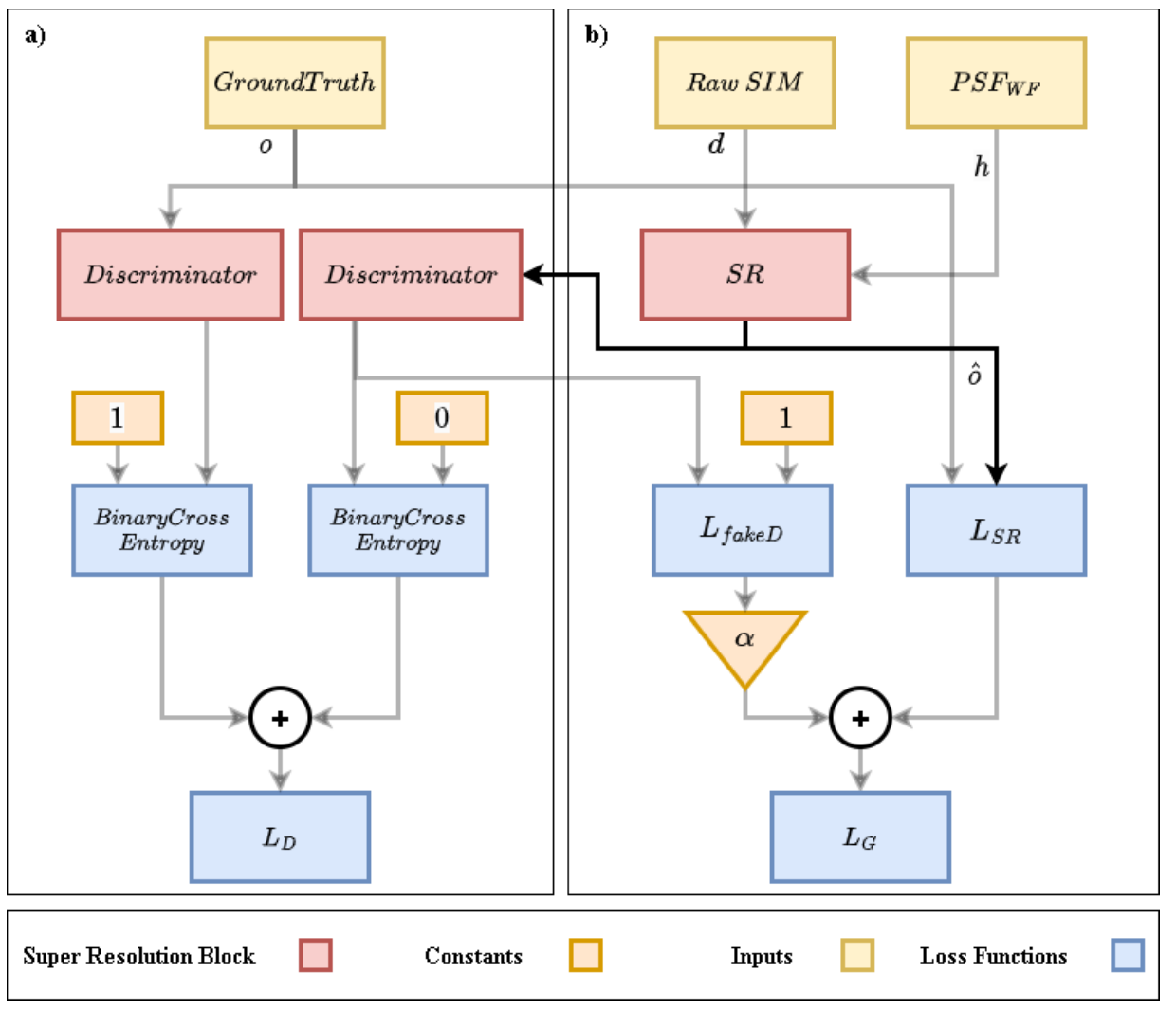
UPIGAN GAN block diagram
UPIGAN discriminator and generator architecture, including the microscope point spread function. Dajkhosh, Hossain, and Preza, Computational Imaging VII, SPIE, 2023, Figure 3, doi:10.1117/12.2663268.

Physics-Informed Reconstruction for 3D Microscopy

Problem
Reconstructing 3D structured-illumination microscopy images from noisy measurements requires both fine detail and fidelity to how the microscope forms an image.
Method
USR combines a learned image prior with repeated corrections based on the microscope point spread function. UPIGAN extends this physics-informed, unrolled approach with adversarial learning to improve reconstruction.
Evidence
Both studies used 18 fixed-cell mitochondrial samples. Their visual comparisons and reported PSNR and SSIM plots favor physics-informed unrolling over the respective non-physics baselines, but neither paper reports an independent external test.
Map901 project banner
Map901 project website banner. Source: map901.memphis.edu.

Map901: Indoor Hazard Mapping for Public Safety

Problem
Emergency responders need more than floor plans: they need to know where safety-critical objects are inside complex buildings.
Method
The Map901 team combined backpack LiDAR and 360° video, segmented safety objects in images, transferred their labels into 3D point clouds, and stitched and georeferenced the building scans.
Evidence
The studies surveyed seven Memphis buildings totaling 1.86 million square feet and addressed 30 classes of public-safety objects. The expanded study used 2,964 labeled images; its 3D maps still required manual cleanup of some labels.